
You bend down to tie your trainers and it’s not as easy as it used to be. At night your lower back feels loaded, your legs heavy and your shoulders pulled forward. And once the baby is home, the tiredness carries on: hours hunched over breastfeeding or bottle-feeding, the pushchair, the baby carrier, the baby always on the same arm. Here you’ll find simple posture, movement and rest tips for everyday life, always with the go-ahead from your midwife or gynaecologist.
The essentials in 30 seconds
- During pregnancy your body changes in weight, shape and balance: a back that feels loaded is very common.
- Moving is still a good idea: at least 150 minutes of moderate activity a week, unless your doctor advises otherwise.
- After the birth, start gently: walking, breathing, pelvic floor work and good posture when you carry your baby.
- Whenever you have a question, always check with your midwife or gynaecologist.
Why does your back feel loaded during pregnancy?
During pregnancy your body changes in weight, shape and balance within just a few months. Your bump shifts your centre of gravity forward, your lower back arches more and your shoulders tend to round. It’s only natural that by the end of the day your back feels loaded, your legs heavy or your body stiffer.
Add to that the hours sitting down, shorter nights and tiredness. Less movement brings more stiffness, and more stiffness makes you want to move less. It’s a cycle worth gently breaking.
Your body doesn’t snap back the day after giving birth either. The NHS points out that joints and ligaments stay more flexible for a few months after the birth, which is why it recommends easing back into intense activity gradually.
Sensations people often describe to us
- “I get up from the sofa in two stages.”
- “My lower back feels loaded if I’m on my feet for a long time.”
- “My shoulders are up by my ears from all the breastfeeding.”
- “It’s hard to turn over in bed.”
If at any point what you feel is intense, comes on suddenly or worries you, your first call should always be to your midwife or gynaecologist.
What exercise can you do during pregnancy?
Unless your doctor advises otherwise, the Spanish Ministry of Health recommends at least 150 minutes of moderate activity a week, combining aerobic and strengthening exercise. A good guide is being able to hold a conversation while you move. If you already did intense sport, you can carry on with adjustments to your routine; if not, now isn’t the time to start something vigorous.
Walking, swimming or adapted classes are common choices. The NHS advises avoiding activities with a risk of falling or of a knock to your bump and, later in pregnancy, not spending long periods lying flat on your back.
If any of these movements feels uncomfortable, stop and mention it to your midwife.
1. Deep breathing, seated
Sit on a chair with your back supported and your hands on the sides of your ribs. Breathe in through your nose, feeling your ribs widen to the sides, and breathe out slowly through your mouth, letting your shoulders drop.
How much: 6 slow breaths · 2 or 3 times a day
2. Gentle cat-camel
On all fours, hands under your shoulders and knees under your hips. Round your back slightly as you breathe out and return to neutral as you breathe in. Keep the movement small, without letting your lower back sag.
How much: 8 slow repetitions · once or twice a day
3. Doorway chest opener
Stand in a doorway and rest your forearm on the frame at shoulder height. Take a small step forward until you feel a gentle stretch across your chest. Hold, breathe and switch sides.
How much: 20 seconds · twice on each side
4. Pelvic floor exercises
Gently squeeze and lift your pelvic floor muscles, as if you were trying to stop yourself weeing, without pulling in your tummy or holding your breath. Alternate long squeezes of up to 10 seconds with quick ones. The Spanish Ministry of Health recommends them before, during and after pregnancy.
How much: up to 10 long + 10 quick · 3 times a day
When can you start moving again after giving birth?
After a straightforward birth, the NHS says you can start gentle activity (walking, gentle stretches and pelvic floor exercises) as soon as you feel up to it. For high-impact activities such as running or intense classes, wait until your postnatal check. If you had a caesarean or complications, your midwife or doctor will tell you when.
The first few weeks aren’t about getting back into your old shape, but about gradually feeling at home in your body again.
The NHS advises against starting with traditional sit-ups, planks, jumping or heavy lifting. If you notice your tummy area or pelvic floor isn’t responding as you expected, mention it at your check: your midwife can point you towards a pelvic floor physiotherapist.
A rough progression
- First days and weeks: short walks, breathing and pelvic floor exercises.
- After your postnatal check: longer walks, gentle mobility and light strength work, if you get the go-ahead.
- Later on: a gradual return to your sport, starting with shorter sessions at a lower intensity.
How to look after your posture when feeding and carrying your baby
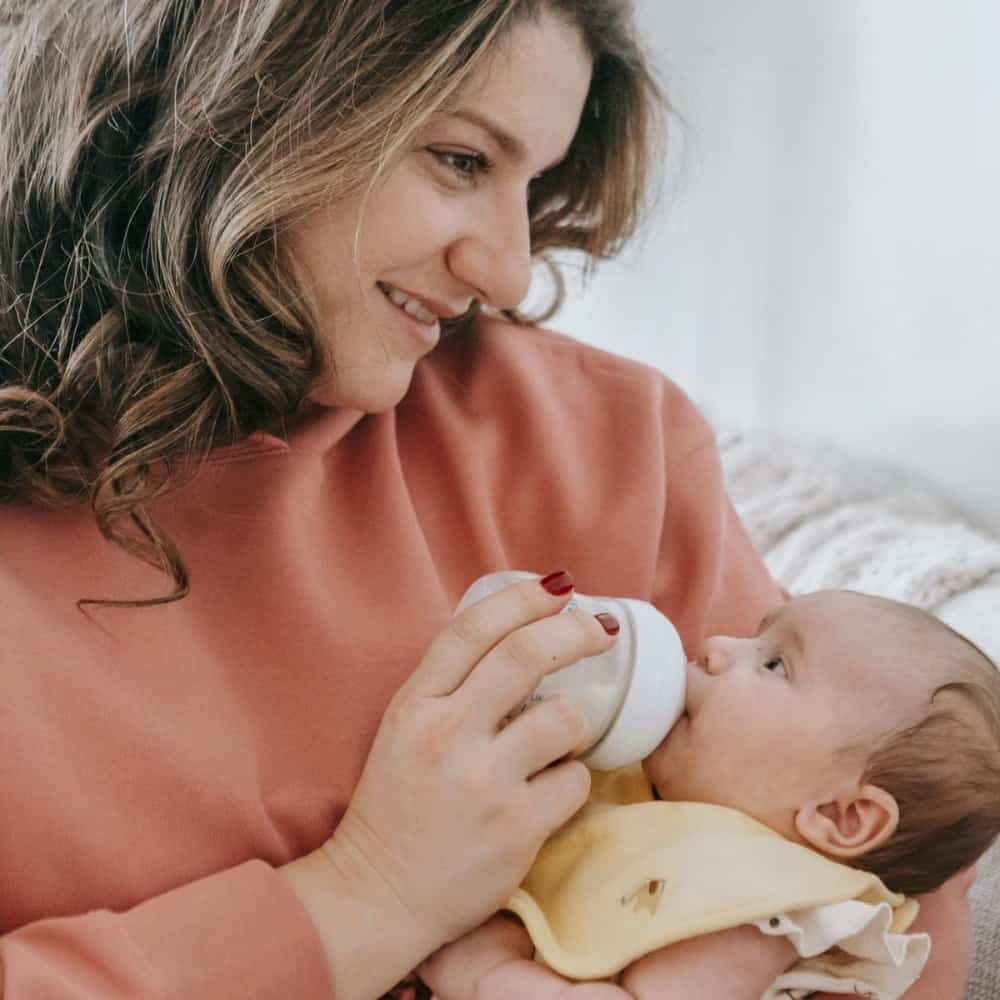
Look for support and height. When breastfeeding or bottle-feeding, sit with your back supported, a cushion behind your lower back and your feet on the floor. Change nappies on a raised surface, bend your knees to pick your baby up and adjust the pushchair so your elbows are bent at a right angle. These are tips the NHS recommends.
There’s no such thing as perfect posture: what tires you most is staying in the same one for a long time. Switch arms, sides and positions often.

- 01Back supportedAgainst the backrest, without hunching towards your baby
- 02Lumbar cushionFill the gap behind your lower back
- 03Feet supportedOn the floor or on a small footrest
- 04Bring baby closerA cushion under your baby, rather than you leaning in
- 05Switch sidesAlternate arm and position at each feed

- Head and back lean towards the baby
- The baby sits low, on your lap
- Head upright, over your shoulders
- Baby at chest height, with a cushion underneath
- Shoulders relaxed, not hunched up towards your ears
| Time of day | What you usually notice | Simple tip |
|---|---|---|
| Breastfeeding or bottle-feeding | Rounded shoulders, tight neck | Back supported, lumbar cushion, feet on the floor; bring your baby to you, not you to them |
| Changing nappies | Back feels loaded from bending over | A surface at waist height; never leave your baby alone on it |
| Lifting them from the floor or cot | You bend down carefully | Bend your knees or kneel, and bring your baby close to your body before standing up |
| Walking with the pushchair | Tense shoulders, leaning forward | Handles at a height that keeps your elbows at a right angle, back upright |
| Baby carrier | Pulling on shoulders and lower back | Well adjusted, with your baby high and close to your body |
And for short nights, you’ll find ideas in our guide to sleeping better: posture, pillow and mattress.
When to contact your midwife or gynaecologist
Pregnancy and the postnatal period have their own medical follow-up, and your midwife and gynaecologist are always your first point of reference. Contact them, or your doctor, if you notice:
- An intense discomfort that comes on suddenly, isn’t getting better or worries you.
- Bleeding, leaking fluid, dizziness or sudden swelling.
- Any symptom that concerns you, however small it may seem.
And before starting or changing any physical activity, ask them whether it’s right for you at this stage.
How do we see it at Ôlin?
At Ôlin we start by listening to you and assessing your mobility, strength, balance and posture, always taking into account what your midwife or gynaecologist has advised. If chiropractic isn’t right for you at this stage, we tell you clearly and point you towards your doctor.
Important: this article offers general information about wellbeing and healthy habits. Chiropractic at Ôlin is wellness-focused and does not replace medical care. If you notice any symptom that worries you, please see your doctor.
Frequently asked questions
Can I keep exercising during pregnancy?
Generally yes, if your pregnancy is going well and your midwife or gynaecologist agrees. The Spanish Ministry of Health’s guideline is at least 150 minutes of moderate activity a week, at a pace that still lets you hold a conversation.
Which exercises are best avoided during pregnancy?
The NHS advises against sports with a risk of falling or of a knock to your bump, such as contact sports, and against scuba diving. It also recommends not spending long periods lying flat on your back later in pregnancy. And if you didn’t do intense exercise before, now isn’t the time to start.
When can I start exercising again after giving birth?
You can start gentle activity, such as walking, breathing and pelvic floor exercises, whenever you feel up to it. For running or intense classes, wait until your postnatal check. If you had a caesarean or complications, your medical team will tell you when.
How do I know if I’m doing my pelvic floor exercises properly?
Ask your midwife: she can check with you at your appointment and, if needed, point you towards a pelvic floor physiotherapist.
Curious about what a first visit looks like?
We walk you through what happens, how long it takes and how to prepare.